Technical Due Diligence & ICVCM Standards

Methodology, Registries & MRV

How American Methane Reduction translates physical U.S. orphan-well decommissioning into measured, permanent, additional Methane Abatement Credits across ICVCM-aligned registries.

Full Technical Deck (1.2 MB)
Asset Selection & Additionality

Orphaned / Abandoned vs. Marginal / Abandoned Wells

AMR’s core operational focus is currently Orphaned / Abandoned oil & gas wells—delivering transparent, permanent, strictly additional methane elimination where no solvent operator or allocated public plugging funds exist.

Orphaned / Abandoned Wells

AMR Core Focus
  • Actively leaking methane and has not produced or received revenue for at least 1 year.
  • No designated operator of record who can be held accountable for maintenance or remediation.
  • No State or Federal funds allocated for plugging; responsibility otherwise falls to government agencies and taxpayers.
  • Deteriorates continuously without intervention, threatening local groundwater and soil in energy-producing regions.
Marginal / Abandoned Wells

Warning Category
  • Actively leaking methane with no production or revenue for at least 1 year.
  • Has a designated operator of record who theoretically bears responsibility but lacks financial incentive or capital to plug.
  • No funds allocated for plugging due to operator financial constraints; likely to transition into fully orphaned status.
  • Located in mature producing regions where reservoir depletion renders continued operation uneconomical.
ICVCM-Aligned Crediting Standards

Three Top-Tier Orphan-Well Registries

AMR aligns project selection, well grouping, and measurement documentation to buyer-selected crediting methodologies—including ACR (active on ACR1166), One Carbon Protocol, and Isometric.

American Carbon Registry (ACR) · Winrock International

A nonprofit enterprise of Winrock International founded in 1996—the first private voluntary GHG registry in the U.S. and the first ICROA-approved program to publish a peer-reviewed methane orphan-well plugging methodology.

Currently ICVCM Accredited

Overview & Market Position

  • Over 200 million metric tons CO2e credits issued across North America.
  • CORSIA-approved and recognized by major compliance markets including California Cap-and-Trade.
  • Active registry for AMR Great Plains 1 (ACR1166) under ACR Orphaned Well Plugging v1.0.

Methodology & Core Functions

  • Quantifies direct emission reductions from plugging orphaned and abandoned oil & gas wells.
  • Enforces strict baseline calculations, post-plug monitoring, independent VVB verification, and project boundaries.
  • Issues publicly serialized Emission Reduction Tons (ERTs) tracked through retirement.
Visit American Carbon Registry (acrcarbon.org) ↗
The Scale & Cost Advantage

Our Eight-Step Well-to-Credit Process

AMR generates verified Methane Abatement Credits at a fraction of the cost of direct air capture (DAC) or industrial CCS—providing abundant domestic supply sized for energy-intensive buyers such as data centers.

  1. 01

    Internally screen orphaned wells across active states to build an inventory of leaking gas wells.

  2. 02

    Take legal ownership and control of thoroughly screened wells designated for permanent plugging.

  3. 03

    Group eligible wells into structured projects aligned with high-quality buyer-selected methodologies.

  4. 04

    Engage specialized field vendors for baseline flow testing, emissions measurement, and plugging.

  5. 05

    Acquire formal listing and approval to proceed under the selected registry and methodology.

  6. 06

    Engage an independent ANAB-accredited third-party Validation and Verification Body (VVB).

  7. 07

    Execute direct pre-plug measurement, permanent multi-zone cement plugging, and post-plug verification.

  8. 08

    Generate, serialize, and take possession of verified credits after final registry approval.

Interactive Auditability & Co-Benefits

Field-to-Registry Chain of Custody

For AMR Great Plains 1 (ACR1166), independent VVB verification by SES, Inc. ↗ feeds directly into American Carbon Registry ↗ serialization and direct AMR / Cloverly ↗ delivery. Select any stage below to review audit artifacts.

Stage 1 — Wellhead MRV & Permanent Plugging

Hover or select any stage above to inspect due-diligence controls
Operational Control
Verification Mechanism
Buyer Audit Artifact
Environmental & Community Co-Benefits

Protecting Local Aquifers Alongside the Atmosphere

Beyond methane abatement, permanent well plugging eliminates groundwater contamination risk (60% of U.S. drinking water relies on groundwater, USGS; ~20% of abandoned wells leak, EDF), removes surface hazards, restores land usability, and creates skilled regional jobs.

Dissolved CH4 Hazard Scale (NIEHS / EHP) 6.4× Ignition Threshold
0 mg/L Baseline
10 mg/L Explosion hazard limit
64 mg/L Documented near leaking wells
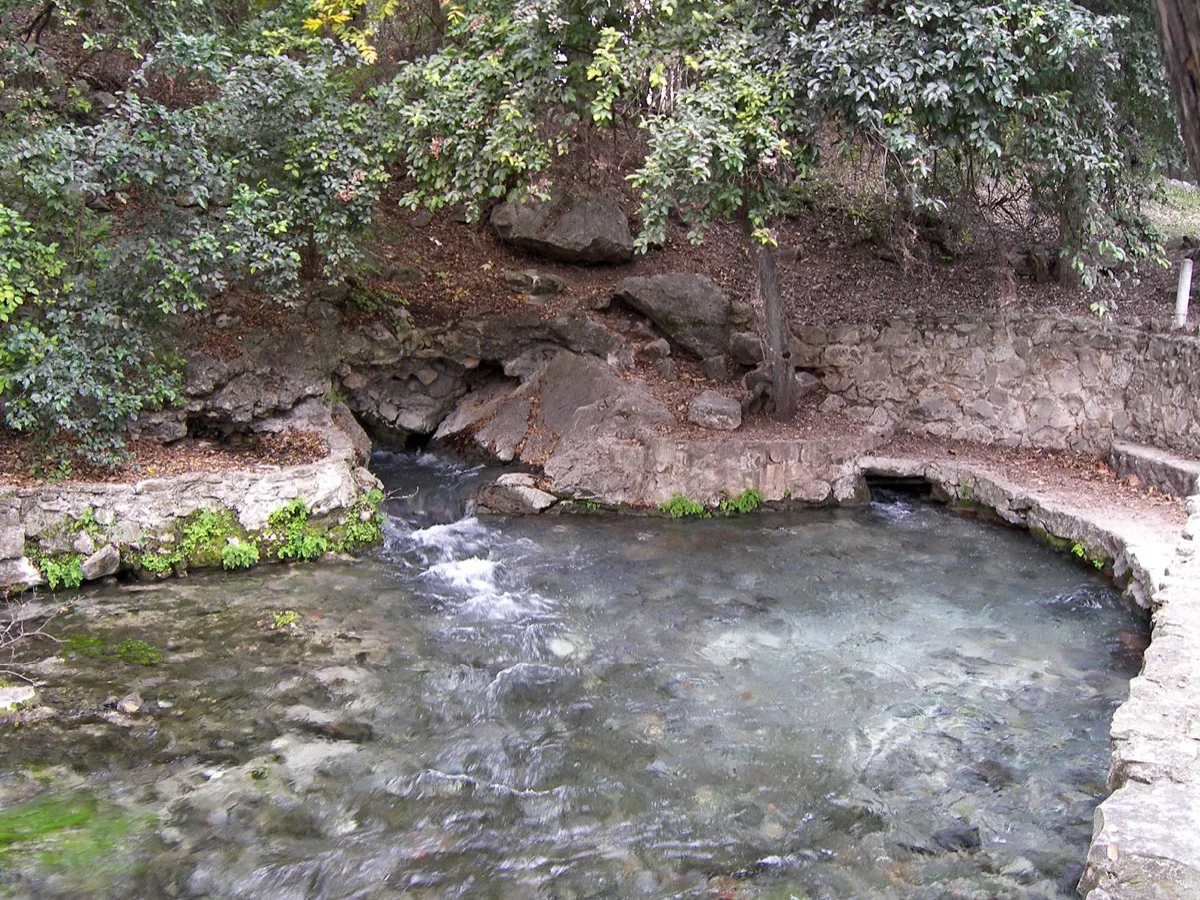
Clear spring water emerging from limestone rock at Comal Springs fed by the Edwards Aquifer in Texas
Comal Springs, Edwards Aquifer, Texas — regional groundwater protection (Photo: Larry D. Moore, CC BY 4.0).
Primary Literature & Institutional Sources

Verified Reference Ledger

Every atmospheric, groundwater, well-inventory, and registry claim across this site maps to primary scientific, regulatory, or registry publications.

Primary scientific, regulatory, and market sources supporting AMR disclosures
Institution Publication / Standard Primary Scope Direct Source
IPCC Sixth Assessment Report (AR6), WG1 Methane GWP20 (84×) and GWP100 (29.6×) metrics ipcc.ch
Enverus, TX RRC & USGS National Marginal, Orphan & Unknown Well Dataset (Aug 2024) 1,870,645 U.S. onshore legacy wells including 120,394 documented orphans usgs.gov
American Carbon Registry Plugging Orphaned Oil & Gas Wells v1.0 & Registry ICVCM CCP-eligible methodology; >200M tCO2e issued; ACR1166 acrcarbon.org
SES, Inc. ANAB ISO 14065 GHG Validation & Verification Body Independent validation & verification of ACR1166; California ARB approved ses-corp.com
Cloverly Cloverly Catalyst Carbon Platform Sales channel distribution, buyer portals, API & retirement tracking cloverly.com
UNEP Methane Emissions & Climate Change (2021) ~30% share of pre-industrial global warming attributable to methane unep.org
U.S. EPA Global Methane Initiative — Importance of Methane ~12-year atmospheric lifetime & rapid cooling benefit epa.gov
U.S. Geological Survey Water Resources Mission Area ~60% U.S. drinking-water reliance on groundwater aquifers usgs.gov
Sherwood et al. (PubMed / NIH) Environmental Science & Technology (PMID 27402747) 4.5% methane contamination rate in Denver-Julesburg water wells pubmed.ncbi.nlm.nih.gov
NIEHS / EHP Environmental Health Perspectives (10.1289/ehp.119-a289) 10 mg/L hazard threshold & 64 mg/L readings near leaking wells ehp.niehs.nih.gov